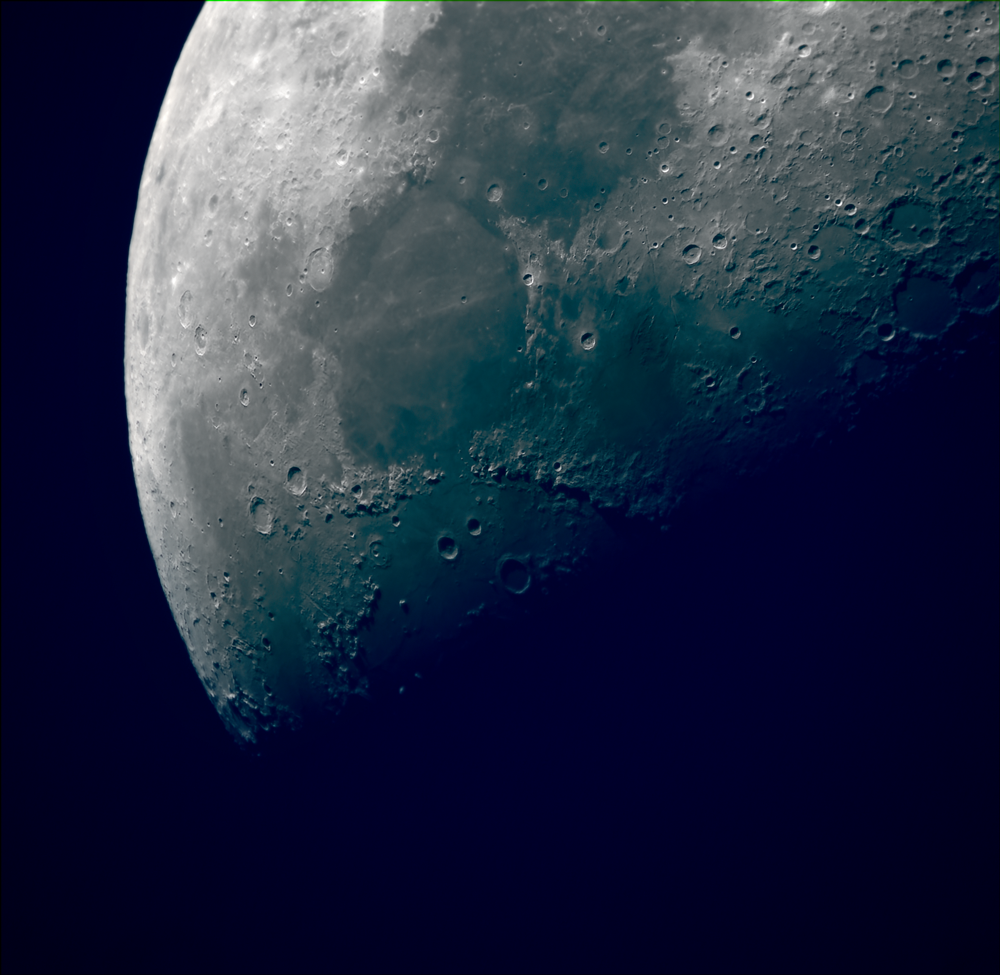
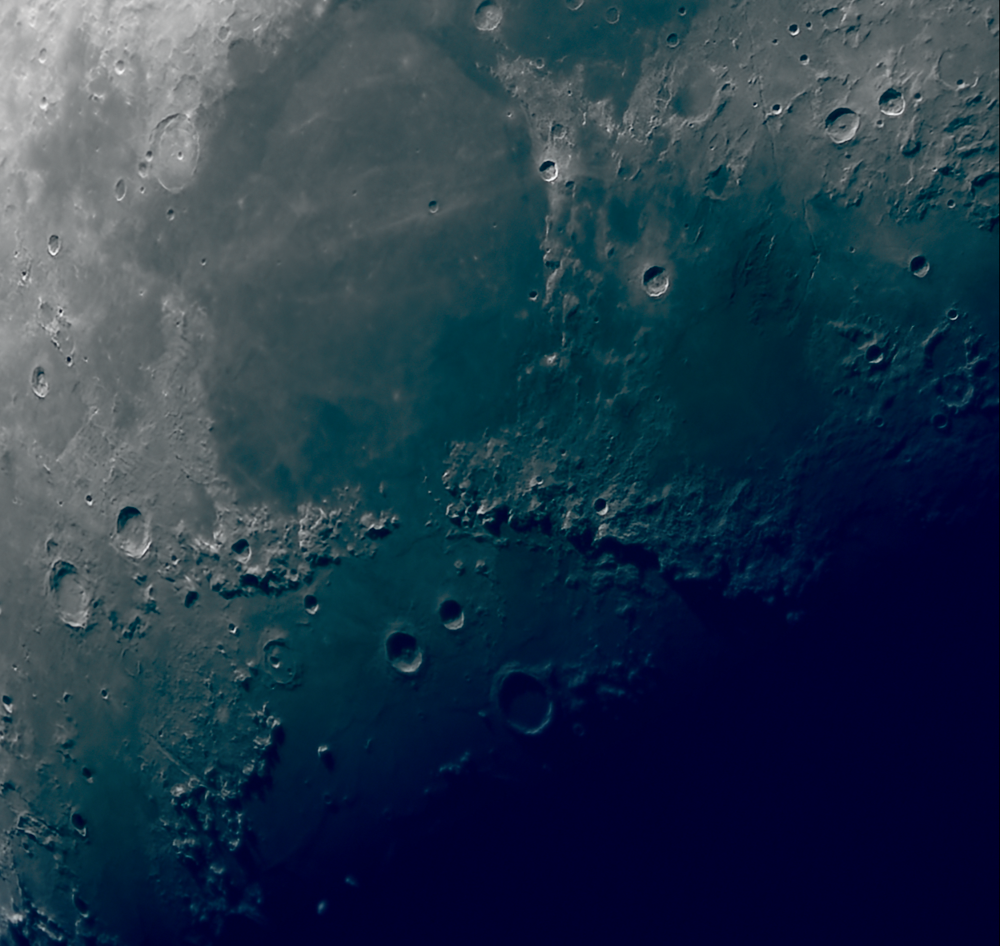
While waiting for darkness to fall, and with my gear set up for a night of galaxy imaging, I decided to grab some shots of the moon since everything was all set up and ready to go.
Not too bad for a target of opportunity. As with solar imaging, this is something I haven’t doe for ages, and it reminds me I ought to do this more often.
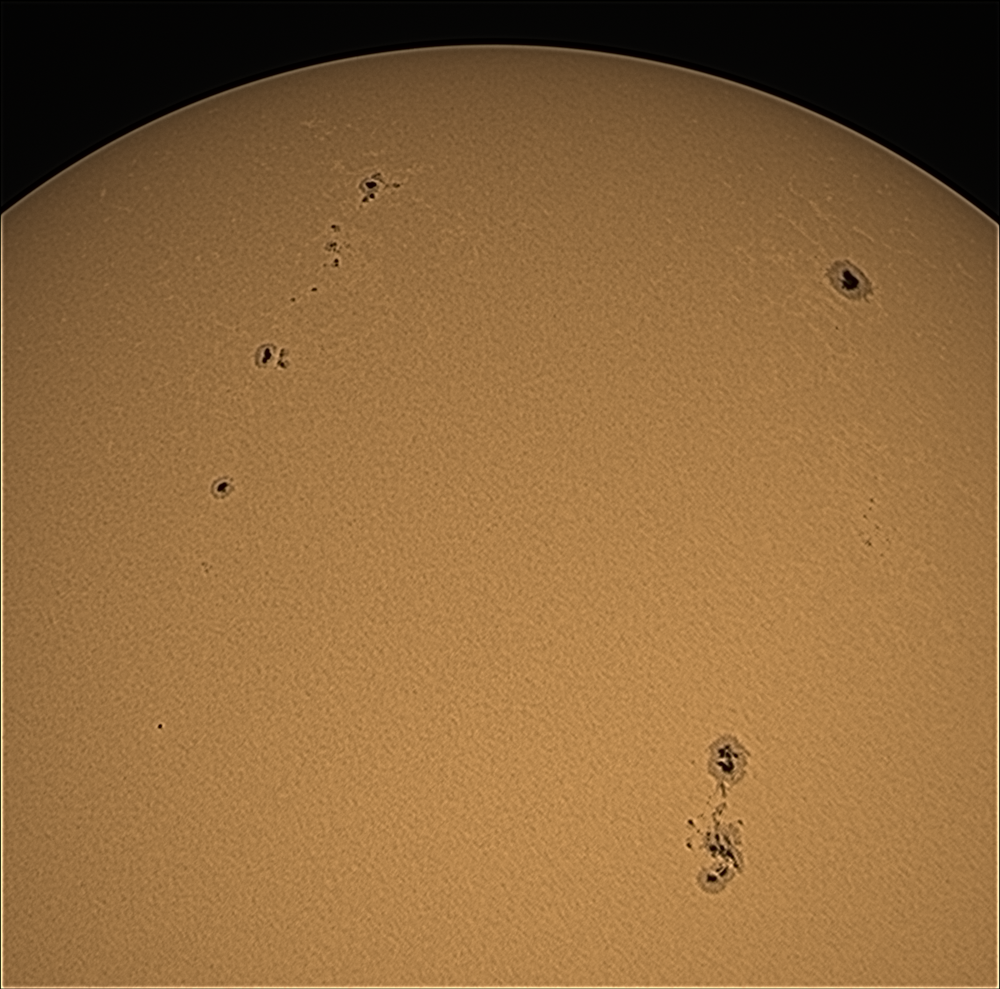
After a meh night of imaging, mainly due to the smoke from the Alberta wildfires killing the skies here, I decided to get the solar filter out and see what the sun looked like. I haven’t done this in ages, and some of my gear has changed along the way.
It took a while to actually figure out what the heck I was doing. Even focusing was hard. The focus position moves a lot when going from a cold tube at night to one that is baking in the sun. It took all morning to get on top of that.
The final result was worth it though. After capturing a whole bunch of video files and processing then through AstroStakkert with some deconvolution in PixInsight I ended up with this:
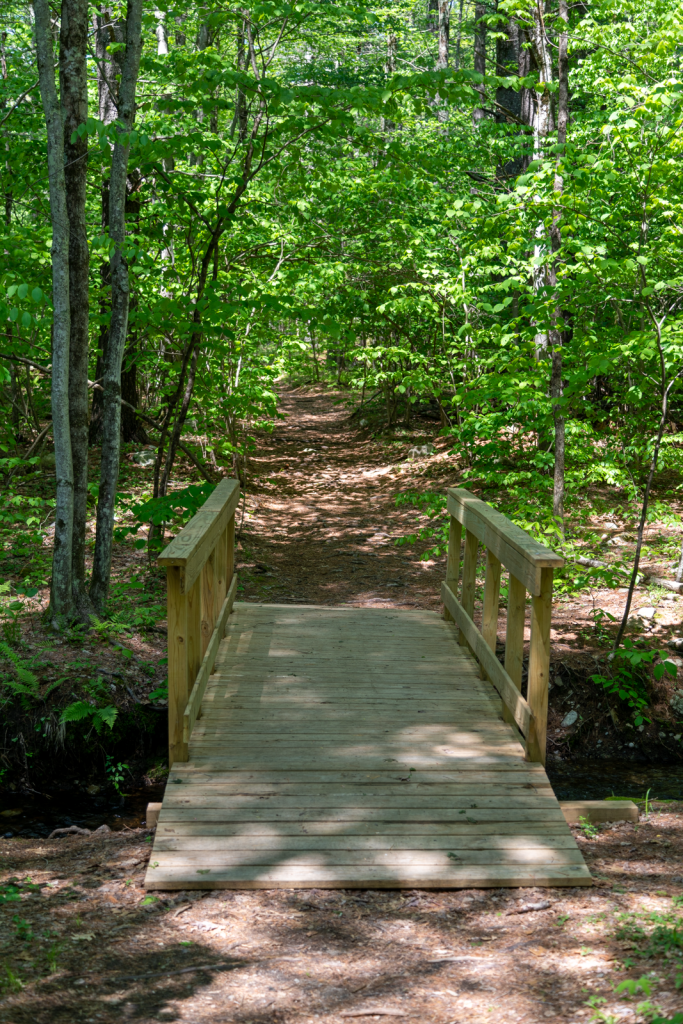
Landscape photography is often associated with travel to fantastic locations, epic hikes and fantastic vistas. And while this does sometime happen, often with travel to far off places a plane ride away, we are far more often slinking out for an afternoon to somewhere local and making the best of what you have locally.
And for many of us this could be boring. Fortunately living in New Hampshire, I have access to lots of locations that are within an easy day’s drive with a 150-mile radius. (Yes, driving 300 miles for a day trip is not unusual over here …)
But the trips most often taken are those that are within a 20-mile radius of home. And as luck would have it, you can find some interesting things in the woods round here that can be quite unexpected.
These woods are all secondary growth. The original forest was entirely felled in the late 1700 and early 1800 to make way for farming. But the ground here tends to grow rocks as much as anything else. The history of the farms is visible everywhere if you know where to look. And it’s hiding in plain sight.
Everywhere you look in the woods here you see these stone walls, looking oddly out of place in the forest.
These are old field boundaries, built up over time as the farmers removed the boulders from the land so they could work it.
Most of these are not small, and every single one was moved by hand & horse from the field to where they are now.
You see this everywhere in New Hampshire.
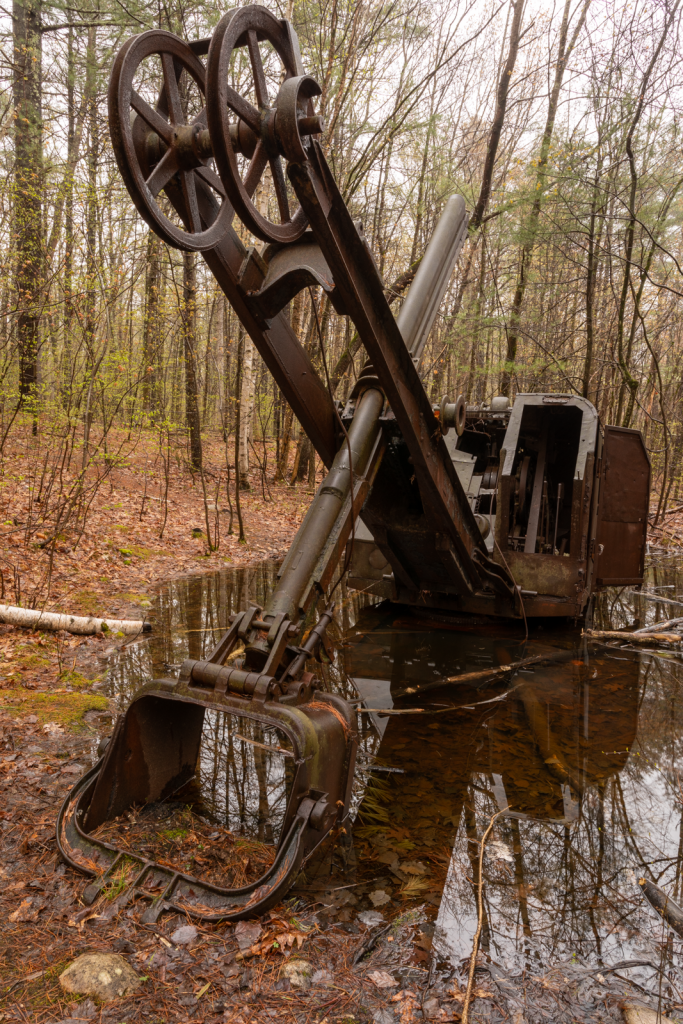
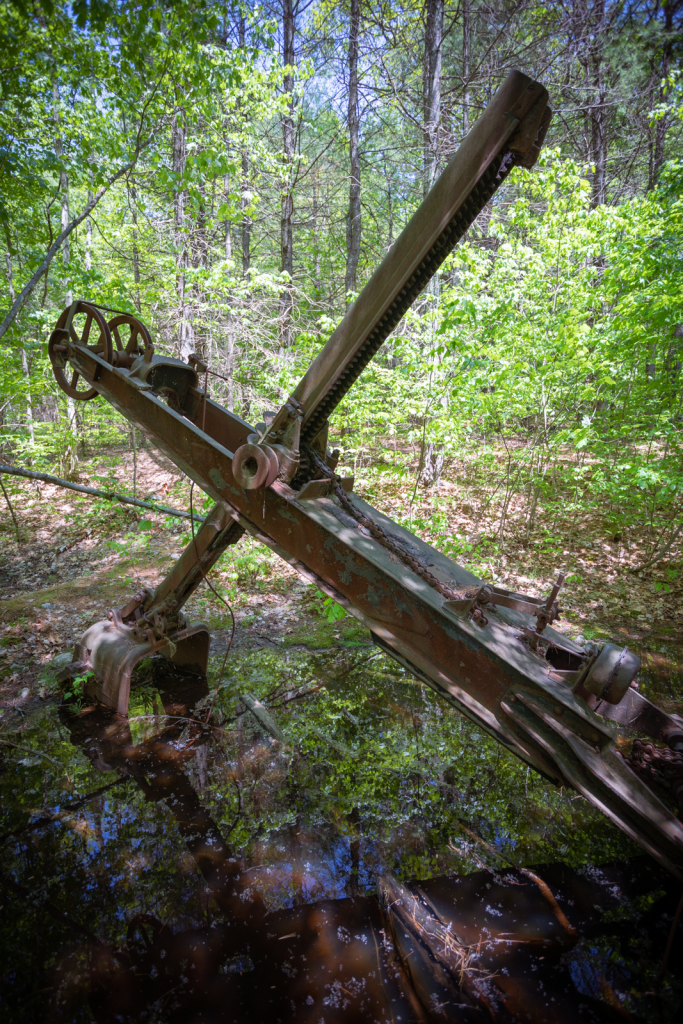
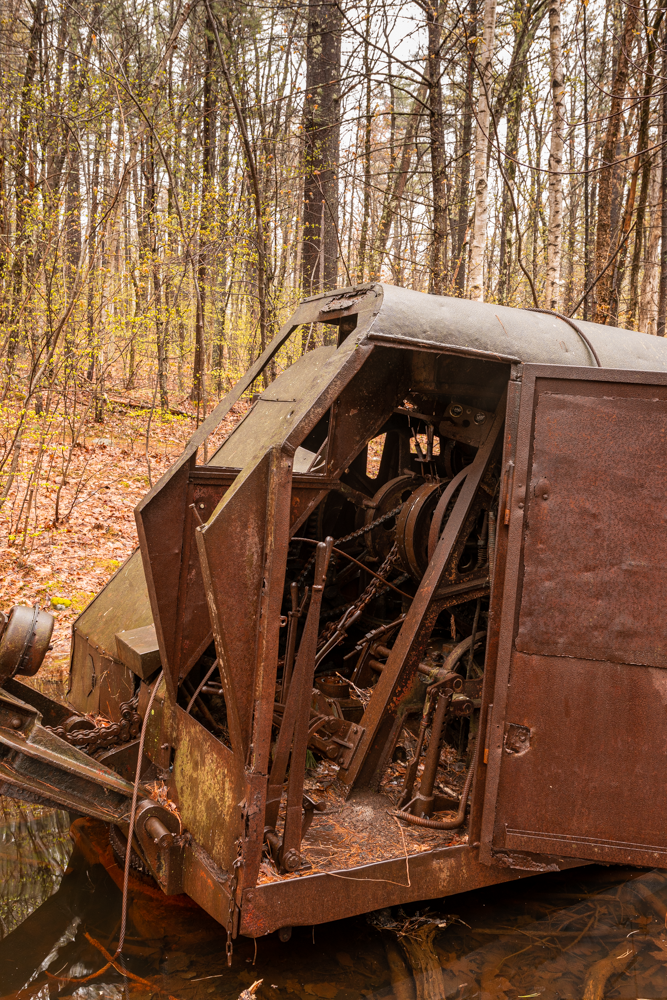
And then relics of an industrial past can emerge unexpected from the woods. What the history of this excavator is, nobody seems to know. It is an Osgood excavator. The Osgood company was founded in Mario, Ohio in 1910 and went defunct in 1954.
At a wild guess I would say that this dates from maybe the 1930’s or so. The tracks are still there, sitting in the pool of water where it was abandoned, clearly decades ago before the town got built up around this section of forest.
Here it sits, a testament to a former time, trees growing up around it.
Where it lies has become home to a multitude of frogs as nature slowly swallows it up.
It’s been a rough start to the year. We are nearly half-way through at this point, and the number of astro-imaging nights have been rather scant between the work schedule and the weather and that nemesis of deep-sky astrophotographers everywhere – the moon.
But recently, the skles cleared, the work schedule cooperated, the moon wasn’t full, and I got a couple more night of imaging in.
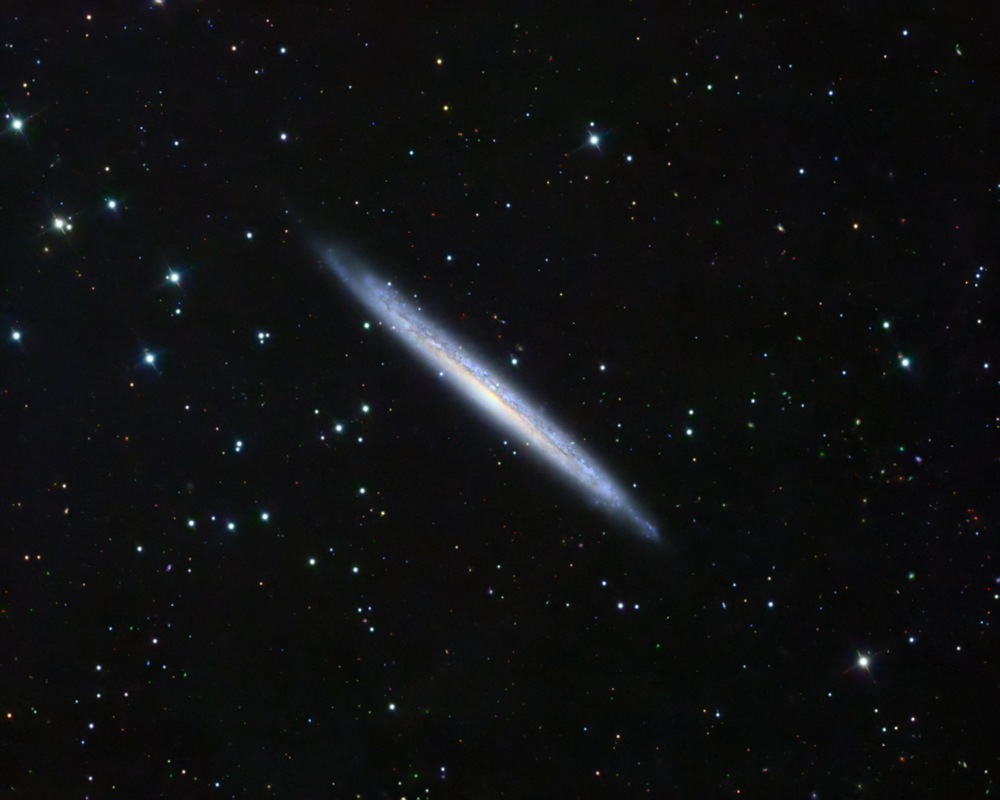
The first target was NCG 5907, a galaxy in the constellation of Draco. It is bit of an oddity, being composed almost entirely of dwarf stars.
This was taken using the AGO Optical 10″ iDK riding the Paramount MX+ and using the QSI camera with LRG filters. The total exposure time was 10:50 Hrs over 2 nights.
NGC-5907
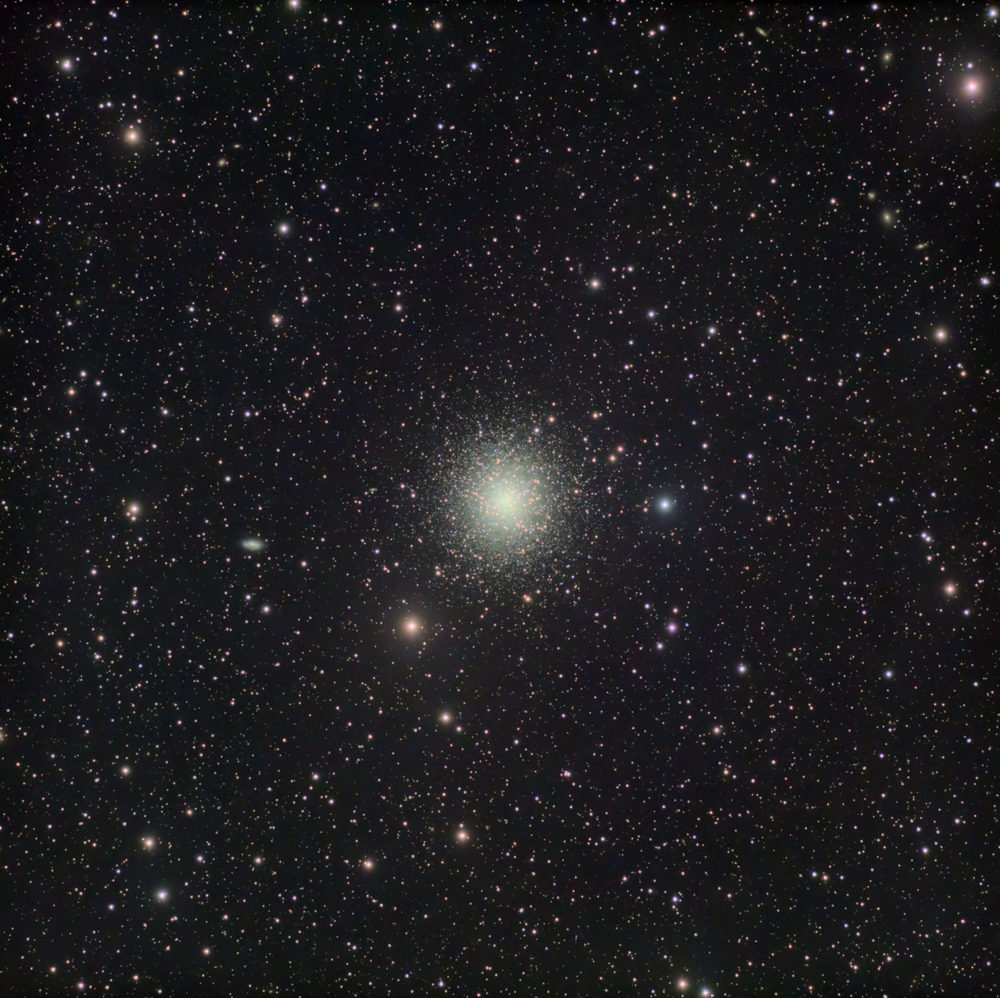
The second target was really a target of opportunity. Without getting too technical, I was fiddling with back-focus spacing on the optical train (which probably sounds like blah blah blah). This entailed taking things apart, adding or removing spacers and then testing the result. For over 2 hours. In the dark.
At the end when I was pretty happy with the spacing, I wanted to get some data to process and validate the result. I never intended to fully process the data set, but once I started it turned out to pretty good, so I just kept going. And I’m pretty happy with the final result. This was taken with a Skywatcher ES100 with a Starizona Apex reducer and a ZWO ASI 533MC-Pro camera. The total exposure time was 4:35 Hrs.
Messier 13 in Hercules
Serious wildfires in Calgary & Alberta are currently pushing smoke up into the Jetstream. This carries the smoke across the entire US and has resulted in an impenetrable haze covering the night sky. Which is quite incredible to consider. This has been impacting astronomy all the way over here on the east coast of the USA.